Speakers


Jonathan Dickstein Assistant Professor Arihanta Institute
Jonathan Dickstein is the Tirthankara Shreyansanath Endowed Assistant Professor of Jain and Vegan Studies at Arihanta Institute. He received a PhD in Religious Studies from the University of California, Santa Barbara in 2022. Jonathan's areas of research include Jain Studies, religion and ecology, comparative ethics, and South Asian religions.

Paulina Siemieniec Independent Researcher & Fellow Oxford Centre for Animal Ethics
Dr. Paulina Siemieniec is an animal philosopher. She completed her PhD in Philosophy from Queen's University, working under the supervision of Will Kymlicka. She specializes in animal ethics, law, and politics. Her postdoctoral research is on developing the first theory of sexual and reproductive rights for animals.

Richard Twine Reader/Associate Professor in Sociology Edge Hill University
Dr. Richard Twine is Reader/Associate Professor in Sociology, and Co-Director of the Centre for Human-Animal Studies (CfHAS) at Edge Hill University, UK. His most recent book is The Climate Crisis and Other Animals (Sydney University Press, 2024).

Kamini Gogri Independent Researcher & Project Consultant at SOAS, University of London (Centre of Jain Studies)
Kamini Vrajlal Gogri is a scholar of South Asian religions with a focus on Jain philosophy, Śaiva traditions, and ritual studies. Her research explores intersections of devotion, ethics, and non-theistic frameworks, with particular attention to questions of embodiment and interspecies relations. She is affiliated with the Centre of Jain Studies at SOAS, University of London, where she contributes to research on Jain thought and practice. Her current work engages critical theory, hermeneutics, and philosophy of religion.

Inna Häkkinen Visiting researcher University of Helsinki
Inna Häkkinen (née Sukhenko) is a visiting researcher of Helsinki Environmental Humanities Hub, the Department of Cultures, the University of Helsinki. After defending her PhD in Literary Studies (Dnipro, Ukraine), she has been a grantee of Erasmus Mundus mobility programs (Bologna 2008; Turku 2011), Cambridge Colleges Hospitality Scheme (2013) and a research fellow at fellowship programmes (Jyväskylä 2021, Warsaw 2022, Köszeg, 2023). She teaches ‘Chernobyl Studies’ course, ‘Nuclear Heritage’ and ‘Nuclear Narratives in East Central Europe’ at the University of Helsinki. Her general research interests lie within environmental humanities, energy humanities, ecocriticism, nuclear criticism, literary energy narrative studies, world energy literature, nuclear fiction, Chernobyl fiction, energy ethics.

Agnieszka Grynkiewicz Certified Dog Behaviorist University of Warsaw
Agnieszka Grynkiewicz is a dog behaviorist, educator, and researcher based in Warsaw, Poland. Her work focuses on canine social life, co-regulation, autonomy, and the psychological structure of human–dog relationships, especially in urban environments. She combines practice-based insight with interdisciplinary research at the intersection of psychology, anthrozoology, and animal welfare. She is currently developing research projects on relational ecology, agency, and dependence in domestic dogs.
Vasile Stănescu Associate Professor Mercer University
Vasile Stănescu is an Associate Professor in the Department of Communication at Mercer University in the United States. He holds a PhD in Modern Thought and Literature from Stanford University, where he focused on environmental rhetoric.
His work examines animal studies, food studies, media studies, and environmental communication, with particular attention to the intersections of consumer culture, capitalism, and animal liberation. He has conducted research on locavorism, “humane” meat, lab-grown meat, and the ethics of invasive-species removal. His current work explores greenwashing strategies in animal agriculture and their relationship to climate change discourse. His scholarship has been cited in The Guardian, Vox, The New York Times, and Bloomberg News.
Dr. Stănescu is the co-founder of the North American Association for Critical Animal Studies (NAACAS) and a Fellow of the European Association for Critical Animal Studies (EACAS). He previously served as co-senior editor of the Critical Animal Studies book series published by Brill/Rodopi. His work has received support from the Woods Institute for the Environment, the Andrew Mellon Foundation, the Culture and Animals Foundation, the Institutul Cultural Român, and the Climate and Social Science Network at Brown University, where he is a research fellow.

Crystal Heath Veterinarian & Executive Director of Our Honor
Dr. Crystal Heath, a veterinarian, whistleblower, and investigator exposing the hidden ties between corporate interests, public health, and the institutions meant to protect us.

Amber Canavan Associate Director of Vegan Campaigns PETA
Amber Canavan is Associate Director of Vegan Campaigns at People for the Ethical Treatment of Animals (PETA), where she focuses mainly on helping animals used for food. Her victories include persuading Costco, Target, and Albertsons to stop selling coconut milk sourced from brands that used forced monkey labor in Thailand; compelling Starbucks, Dutch Bros, and other coffee chains to drop a vegan milk upcharge; and orchestrating the rescue of over 400 hens from a cage free egg facility that was shutting down. She has worked on various animal rights legislation, including the foie gras sales ban that passed in New York City. Before coming to PETA, she was jailed for an undercover investigation and rescue at Hudson Valley Foie Gras.

Kathryn Gillespie Independent Researcher, VP of Research and Strategy Farm Forward
Kathryn Gillespie, PhD is a writer, researcher, and educator. Her research and teaching interests focus on: ethnography and qualitative methods; feminist and multispecies theory and methods; food and agriculture; political economy; critical animal studies; and human-environment relations. Her latest book, The Sound of Feathers: Attentive Living in a World Beyond Ourselves [Duke University Press, 2026] is about the power of attentiveness to build gentler futures with those other animals with whom we share a world. She is also the author of The Cow with Ear Tag #1389 [University of Chicago Press, 2018]. She has published in numerous scholarly journals and has co-edited three books: Vulnerable Witness: The Politics of Grief in the Field [University of California Press, 2018, co-edited with Patricia J. Lopez]; Critical Animal Geographies: Politics, Intersections and Hierarchies in a Multispecies World [Routledge, 2015, co-edited with Rosemary-Claire Collard]; and Economies of Death: Economic Logics of Killable Life and Grievable Death [Routledge, 2015, co-edited with Patricia J. Lopez]. Gillespie was formerly a Postdoctoral Scholar in Applied Environment and Sustainability Studies Online Masters Program at the University of Kentucky, an Animal Studies Postdoctoral Fellow at Wesleyan University (2016-2018), and a lecturer at the University of Washington. She has volunteered with Freedom Education Project Puget Sound (a Puget Sound, WA-based prison education organization), Food Empowerment Project (a food justice organization in Cotati, CA), and Pigs Peace Sanctuary (a sanctuary for pigs in Stanwood, WA). She is VP of Research & Strategy for Farm Forward.

Rimona Afana Independent Researcher
Rimona Afana is a Romanian–Palestinian researcher, lecturer, activist, and multimedia artist. Her research on mass atrocities against humans and nonhumans is published in leading law and criminology journals and books, and her artwork appears in literature journals, arts magazines, festivals and exhibitions. Over the past twenty years she has also contributed to many civic projects on human and nonhuman rights, in different countries.

Jack Adam Lampkin Senior Lecturer in Criminology York St John University
Jack is a Senior Lecturer in Criminology at York St John University where he is also the Postgraduate Programmes Lead for Social Science. His research interests are in Green Criminology, and he has recently worked on expanding conceptions of environmental harm into outer space, considering the environmental impact of space industries.

Nathan Poirier Independent Researcher
Nathan is a professional math tutor, with a PhD in sociology. Nathan was the first to publish a sustained body of critique against in vitro meat (IVM) and has been doing so for a decade. Nathan also publishes independently on topics that range over various forms of oppression and liberation efforts.

Dana McPhall Founder, Liberate In Mind Senior Lecturer, Institute for Humane Education & Antioch University
Dana is a passionate and thoughtful leader with deep experience in promoting justice for human and beyond human animals through education. In recent years, Dana has led nonprofit educational programs designed to support educators and advocates in promoting interrelated issues of social justice within the U.S. food system, and has taught and designed graduate level courses in humane education, including a self-designed course on race, intersectionality, and veganism. Most recently, Dana has launched a new educational project called Liberate In Mind whose mission is to catalyze the teaching about animality as central in the fight to dismantle racial hierarchy and drive collective thriving.
Monica Mattfield Assistant Professor University of Northern British Columbia
Monica Mattfeld is an Assistant Professor of English at the University of Northern British Columbia, and she specializes in animal studies, disability studies, and the literature and history of eighteenth-century Britain. She has published on the interplay between animal and human disability, early modern horsemanship practices, theatrical animals, the early circus, and performances of gender. Mattfeld is the author of multiple animal-studies publications, including Becoming Centaur: Eighteenth-Century Masculinity and English Horsemanship.

Raj Kumar Singh Research Associate Indian Institute of Management Sirmaur
Dr. Raj Kumar Singh is an anthropologist specializing in Buddhist economies, refugee studies, and the intersection of religion and market practices in South Asia. He completed his PhD from the University of Delhi, where his research examined Tibetan exile economies in Dharamshala through the lens of Buddhist ethics and informal markets. His work spans economic anthropology, political anthropology, and environmental studies, with publications on Tibetan Buddhism, commodification, and religious economies. He is currently working on ICSSR-funded research projects focusing on environmental behavior and employability in India.
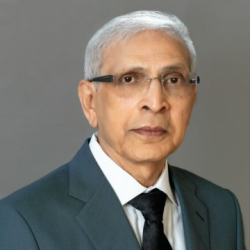
Jasvant Modi Board Member Arihanta Institute
Dr. Jasvant Modi, a Board Member at Arihanta Institute and a renowned gastroenterologist and philanthropist, retired from medical practice in 2014 and has since dedicated his time to philanthropic endeavors.
Dr. Modi and his wife, Dr. Meera Modi, share a deep commitment to philanthropy, particularly in the areas of healthcare field, Jain education, and the promotion of plant-based lifestyle.
Dr. Modi has actively supported numerous healthcare initiatives across various countries, including North America and India. He has sponsored projects for higher education in India and financially supported multiple hostels for both male and female students.
Since 2015, Dr. Modi has been instrumental in promoting Jain studies globally. He has funded numerous chairs, professorships, post-doctoral fellowships, and graduate students in the field. His unwavering support and dedication to Jain studies have inspired many graduate and undergraduate students to pursue this field.
Dr. Modi has held leadership positions at various institutions, including the Jain Center of Southern California, where he served as the President and Board Member.
Dr. Modi has been bestowed with many accolades. In October 2023, he was honored with the esteemed Ahiṃsā Award from the Institute of Jainology at the UK House of Commons. In February 2024, he was conferred with an honorary Doctor of Literature from Sumandeep Vidyapeeth, a renowned institution in Vadodara, celebrated for its exceptional medical education.