
Agenda
Aug 1
2026
9AM-4:30PM PDT
2026
9AM-4:30PM PDT
 Jonathan Dickstein
9:05 am - 9:35 am
“Exploring Sites of Care as Sites of Vegan Subjectification”
30 mins
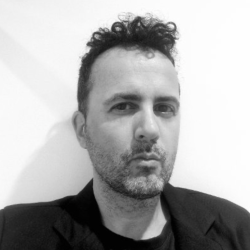 Keynote Speaker: Richard Twine
Social practices of care often coincide with sites of hypercommodification. Vets routinely work in slaughterhouses, whilst parents and health professionals routinely feed their children or patients the commodified animal products of these slaughterhouses. Caring practices offer points of friction and tension within the animal-industrial complex which attempts to normalise and even extend status quo human-animal relations in service of the subject of Capital. This paper tracks the emergence of counter subjects from these sites – vegan vets, vegan parents/children and vegan health professionals – suggesting the capacity of care to create instability within, and resistance to, the animal-industrial complex. The talk explores the possible import of caring practices in producing aligned vegan subjects engaged in the recognition of nonhuman subjectivity and the refusal of Capital’s reduction of life.
9:35 am - 9:55 am
“Bhairava and Dogs: Shared Worlds, Liminal Ethics, and Interspecies Relations in South Asian Religious Thought”
20 mins
 Panelist: Kamini Gogri
This paper examines the association between Bhairava, a fierce manifestation of Śiva, and dogs within Śaiva and Tantric traditions as a reflection on interspecies relations in South Asian religious thought. Drawing on texts such as the Vijñāna Bhairava Tantra, Netra Tantra, Skanda Purāṇa, and regional Bhairava Māhātmyas, it analyzes dogs as Bhairava’s vāhana, liminal guardians, and ritual companions associated with impurity, protection, and death. Through close textual reading, the paper argues that dogs function not merely as symbols but as ethically significant beings within ritual cosmology. Engaging debates in Human–Animal Studies, it shows how the Bhairava–dog dyad mediates boundaries between human and nonhuman, purity and pollution. It proposes a non-anthropocentric ethical framework grounded in liminality and shared vulnerability.
9:55 am - 10:15 am
“Human-Animal Interaction within Nuclear Toxicity: ‘Dance of Agency’ in Justin Morgan’s The Dogs of Chernobyl”
20 mins
 Panelist: Inna Häkkinen
The presentation studies Justin Morgan’s The Dogs of Chernobyl: A Human Disaster Through Animal Eyes (2021) by exploring the human-animal interactions in narrating the nuclear trauma, experienced by the animal world. With a limited number of human protagonists, this novel challenges the simplistic narratives of total devastation while simultaneously highlighting the ongoing environmental and genetic impacts of the nuclear disaster on the wild nature inhabitants. The presentation outlines the framing of human-animal agency interactions via appealing to the ‘Dance of Agency’ in emotionalizing/personalizing nuclear knowledge in envisioning survival (physical/spiritual) and resilience practices within narrating the Chernobyl disaster and further reconsideration of the radiation contaminated Exclusion Zone as a zone of inspiration and resilience. Such studying Morgan’s The Dogs of Chernobyl through the implication of Pickering’s concept of ‘performative agency’ provides a valuable framework for understanding the dynamic interplay between human and animal actors within the narrative, where ‘performative agency’ emphasizes the active role, that both human-animal cooperation plays in decoding toxic environments.
10:15 am - 10:35 am
“Entangled Bonds: Co-Regulation, Dependence, and Relational Autonomy in Urban Human–Dog Relationships”
20 mins
 Panelist: Agnieszka Grynkiewicz
This talk explores how close human–dog relationships in urban life can become both supportive and constraining. Drawing on work in anthrozoology, psychology, and animal welfare studies, I examine how care may gradually shift into overmanagement, and how co-regulation can become concentrated within the dyad. Rather than treating attachment and control as opposites, I focus on the tensions between safety, dependence, and relational autonomy. I argue that when dogs have limited access to broader social and environmental regulation, the human–dog bond may become overloaded, carrying functions that would otherwise be distributed across a wider relational ecology. This perspective invites a rethinking of “pet” relationships not simply in terms of affection or domination, but as dynamic systems shaped by care, asymmetry, and the conditions of urban life.
11:00 am - 11:20 am
“Egg On His Face: Reversal, Reform, and the Politics of Cage-Free Eggs”
20 mins
 Panelist: Vasile Stănescu
This paper examines activist Wayne Hsiung’s recent reversal in support of cage-free egg campaigns, analyzing his claims that cannibalism has declined, welfare has improved, and such campaigns represent an effective advocacy strategy. Drawing on peer-reviewed research, industry documents, and Hsiung’s own earlier investigations, I demonstrate that his cited studies neither directly address cannibalism nor substantiate meaningful welfare improvements. Instead, cage-free systems perpetuate severe air quality problems, increase climate impacts, require expanded hen populations, and elevate disease transmission risks. Industry documents reveal that cage-free labeling functions as a deliberate form of humanewashing, misleading consumers while stabilizing rather than challenging industrial production. I further show that reliance on flawed polling data systematically undercounts existing vegetarian and vegan populations, obscuring the political potential of constituencies already committed to plant-based consumption. Beyond individual critique, this case study illuminates broader trends in animal advocacy and demonstrates the necessity of principled commitments over strategic accommodation with capitalist animal industries.
11:20 am - 11:40 am
“Beyond Cage-Free: Why Egg-Free Corporate Campaigns Offer a More Effective Path Forward”
20 mins
 Panelist: Crystal Heath
Cage-free egg campaigns are framed as welfare reforms, yet evidence suggests they have increased public trust and confidence in eggs. Since cage-free campaigns began U.S. per capita egg consumption rose from 256 eggs in 2015 to 292 in 2019. Meanwhile, there is little awareness of the welfare, public health, and food security costs of cage-free eggs. In the U.S., 85–97% of hens in non-cage systems experience keel bone fractures, while feather pecking occurs in 80–94% of cage-free flocks. Cage-free systems also generate approximately 19% higher ammonia emissions and 5–15 times higher dust levels than conventional cages. The increasing demand for eggs leads to an increased risk of infectious diseases. High-density poultry operations act as incubators for pandemic influenza strains. Redirecting advocacy resources toward corporate egg-free campaigns that remove eggs from supply chains while expanding access to high-protein animal-free meals is necessary to protect animal welfare, public health, and food security.
11:40 am - 12:00 pm
“The Regrettable Failure of Cage-Free Campaigning: A New Strategy for a Vegan Future”
20 mins
 Panelist: Amber Canavan
Over the past decade, corporate animal-welfare campaigns have produced thousands of commitments to transition egg supply chains to “cage-free” housing, supporting a continuation of factory farming, cruel transport, and slaughter. This shift, alongside cage-free marketing, has fostered a misleading narrative of “happy” hens engaging in a full range of natural behaviors, which they do not, and creating a false impression that “cage-free” means “cruelty-free,” while failing to decrease demand for eggs, keeping factory farming alive. This talk centers on the findings of PETA’s 2026 white paper, The Failure of Cage-Free Housing Systems to Reduce Overall Hen Suffering, which examines the welfare, industry, and demand-side consequences of cage-free campaigning, albeit well-intentioned. It outlines vegan-centered strategies to weaken the egg industry by accelerating the promotion and adoption of animal-free foods—an approach that works to reduce hen suffering in industrial production, end factory farming, and lower the devastating environmental footprint of agriculture.
1:00 pm - 1:30 pm
"The work that nothing does: A call for radical doing and undoing in multispecies worlds"
30 mins
 Keynote Speaker: Kathryn Gillespie
How might we think about “doing nothing” as both a perpetuation of multispecies harms and an ethic for transforming these harms and imagining and practicing gentler and more caring multispecies futures of shared flourishing? The everyday relationships in which we’re entangled with other species are often so normalized, so taken for granted, that we can imagine we’re doing nothing at all to harm other species and the world around us. But even as we might think we’re doing nothing, we’re always doing something. Uncovering that “something” requires excavating the normative systems driven by a capitalist and colonial orientation to the world and our perpetuation of those systems in often-unnoticeable ways. It requires attending to what that nothing is that we’re doing. Calling for a political and ethical praxis of a different kind of doing nothing—in the sense of doing no harm, we pause, we stop, we observe, we cultivate attentiveness, we make attempts at understanding, we fail, we try again, we sit in a state of unknowing and think about this incomplete knowledge not as a way to justify violence through willful ignorance but as an orientation through the opposite—that doing nothing can mean that we err on the side of stopping what we’re actually doing as a path to respect for the radical alterity of their being, humbly recognizing our own limitations and our own lack of understanding? Can we sit, carefully, in a state of stillness and unknowing, in this state of doing nothing? And can we look at our current state of seemingly doing nothing as always doing something and that a different configuration of doing nothing, as in the form of attentiveness this kind of doing nothing invites, necessarily demands a transformative mode of living and being that leads to doing a very different something?
1:35 pm - 1:55 pm
“Cosmic Captivity and Animal Ethics: Exploring the Suffering of Animals Used in Outer Space Research”
20 mins
 Panelist: Rimona Afana
 Panelist: Jack Adam Lampkin
While Yuri Gargarin is widely heralded as the first to visit outer space in 1961, this was only possible following intensive American and Soviet programmes of research with animals who visited space beforehand. This began with the launch of fruit flies in 1946, first sent to space to test whether living organisms could survive exposure to cosmic radiation. In 1957, Laika (a part-Samoyed Terrier Dog) was sent into space to conduct the first orbital flight around Earth. Laika is regarded as the first sentient being to die in space, though many animals died in test flights prior to Laika, but usually upon impact. Nonhuman primates, rodents, cats, dogs, tortoises, frogs, moths, ants and other animals have since played a part in technological advancement, space exploration, and expansionism. We discuss the (ab)use of animals for outer space research and the ethics of animal testing for technological advancement. This adds to the growing body of literature in astro-green criminology (the study of environmental crimes and harms, as they pertain to outer space). Taking a non-speciesist approach, we argue that keeping animals captive for research purposes is a form of abuse prioritising human wants and needs over the nonhuman. This typifies an anthropocentric approach to space exploration, rather than a biocentric or ecocentric one.
1:55 pm - 2:15 pm
“Animal Consumption as Sexual and Reproductive Rights Violations”
20 mins
 Panelist: Paulina Siemieniec
This paper examines the politics of animal consumption through the lens of sexual and reproductive rights and health for animals. I critically analyze two opposing claims: (1) that humans have the ‘right’ to sexually violate animals to exploit their reproductive capacities and labour for the purpose of consumption, and (2) that animals are entitled to protection from such exploitation and to the highest attainable standard of sexual and reproductive health. I argue that the first claim is not only based on an illegitimate assertion and exercise of power over animals, but that it also undermines our established normative commitments to protecting those who are vulnerable to being sexually and reproductively violated. I carefully consider the second claim from the perspective of both the negative freedoms of animals from sexual and reproductive harms and the positive freedoms and entitlements animals are equally entitled to enjoy, such as the freedom of choice in sexual and reproductive decision-making. I draw on an original (and the first) account of sexual and reproductive rights to health for animals that I have developed, which shows that the basis for these rights is the same in the animal case. In doing so, I challenge the human norms of consumption that contradict extending sexual and reproductive health and rights norms to animals. I conclude by troubling the assumption that humans ‘can’ have access to the private bodies and lives of animals, and ‘can’ prevent animals from leading their own sexual and reproductive lives.
2:15 pm - 2:35 pm
“In Vitro Meat as a Conflict of Interest Between Humans and Nonhuman Animals”
20 mins
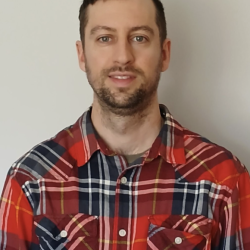 Panelist: Nathan Poirier
In vitro meat (IVM) is a topic that continues to draw strong reactions either for or against it. In this presentation, I primarily analyze Josh Milburn's support of IVM as presented in his book Food, Justice, and Animals, focusing on his vision for cultivated meat as part of a system that respects both animal rights and human rights. Primarily I critique Milburn's scenario of animals as workers, his critique of "old" abolitionism, and his notion of finding a "place" for formerly farmed animals. Within the context of animals and capitalism, based on Dinesh Wadiwel's Animals and Capital as well as green criminological insights into green justice from Lynch et al's Green Criminology and Green Theories of Justice, I argue that any pro-IVM argument, especially those that label IVM as "animal friendly" or free from harm are at odds with animal interests. I'll detail conflicting views of justice between these texts and ultimately argue that this fundamental conflict prevents any argument for IVM from being considered viable for animal liberation and definitively not vegan.
3:00 pm - 3:20 pm
“If You’re Not Talking About Anti-Blackness, You’re Not Really Talking About Animal Liberation”
20 mins
 Panelist: Dana McPhall
This presentation will discuss the intertwined relationship between the social constructs of race and “the animal,” and the implications of the human-animal divide that is at the core of white supremacy for the liberation of Black people and beyond human animals, especially in today’s political climate. For centuries, Black people have been depicted as animals in order to justify enslavement, violence, and terror. At the same time, such depictions serve to reinforce the subjugation of beyond human animals. This presentation will explore the importance of recognizing the broad landscape of white supremacy within these interconnected liberation struggles, including within the context of present-day atrocities and their connection to the history of state-sanctioned repression here in the U.S., from slave patrols to the overturning of Reconstruction to Jim Crow. The presentation will also consider why social justice movements should come together to dismantle systems of racial hierarchy in their entirety.
3:20 pm - 3:40 pm
“Equines, Gendered Ableism, and Normative Violence in Eighteenth-Century England”
20 mins
 Panelist: Monica Mattfield
In 1726, Jonathan Swift wrote in Gulliver’s Travels: “when they [horses] belonged to persons of quality, employed in travelling, racing, or drawing chariots, they were treated with much kindness and care, till they fell into diseases, or became foundered in the feet, but then they were sold, and used to all kind of drudgery till they died, after which their skins were stripped and sold for what they were worth, and their bodies left to be devoured by dogs and birds of prey.” In this presentation I challenge approaches to, and definitions of, ableism that confine it to the ‘human,’ and I do so by bringing animal studies and disability studies together to explore some of the many questions raised by Swift’s satire on the state of English equines during the eighteenth century. Focusing specifically on one type of horse at the bottom of the human and equine hierarchy, the carthorse, I examine the interwoven definitions of ‘disability,’ ‘disabled,’ and ‘deformity’ in relation to equines while thinking about other ableist labels that conflate equine and human under a broad, cross-species system of oppression. This system, I argue, was highly gendered, using period views towards women on society’s fringe to construct ideas of and treatment towards labouring equines. In turn, I argue, the nature of eighteenth-century ableist labels and behaviours creates and promotes ideas of who is good to be good to and who is good to mistreat, while actively constructing often violent mistreatment as expected, ‘normal’, and based upon a naturalized language influenced by period medical knowledge and moral codes. In other words, animals and humans of the eighteenth century existed within a larger ecological community where multiple species, and beings with diverse abilities and body types, were influenced by discriminatory thought that determined who was worthy of life, who should die, and who should be included under the category of cared for.
3:40 pm - 4:00 pm
“From Plateau to Exile: Meat Consumption, Ecology, and Moral Continuity among Tibetan Refugees”
20 mins
 Panelist: Raj Kumar Singh
This paper examines the consumption and service of meat among Tibetan refugees as an ethical practice shaped by ecological history and sustained through displacement. In Tibet’s high-altitude plateau, harsh climatic conditions and limited agriculture historically necessitated meat consumption for survival. Drawing on long-term ethnographic research among Tibetan refugees in Dharamshala, the paper shows how this ecological logic is carried into exile in India, where meat continues to be consumed and served despite Buddhist ideals of non-harm. Rather than framing this practice as ethical inconsistency, the paper argues that meat consumption is understood locally through narratives of necessity, bodily endurance, and inherited habitus. Refugee life, religious tourism, and market dependence further normalize these practices. By situating animal consumption within environmental constraint and refugee continuity, this study challenges universalist vegan ethics and abstract moral judgments, offering a context-sensitive account of how human–animal relations are lived, justified, and reproduced across changing landscapes.
 Jasvant Modi